
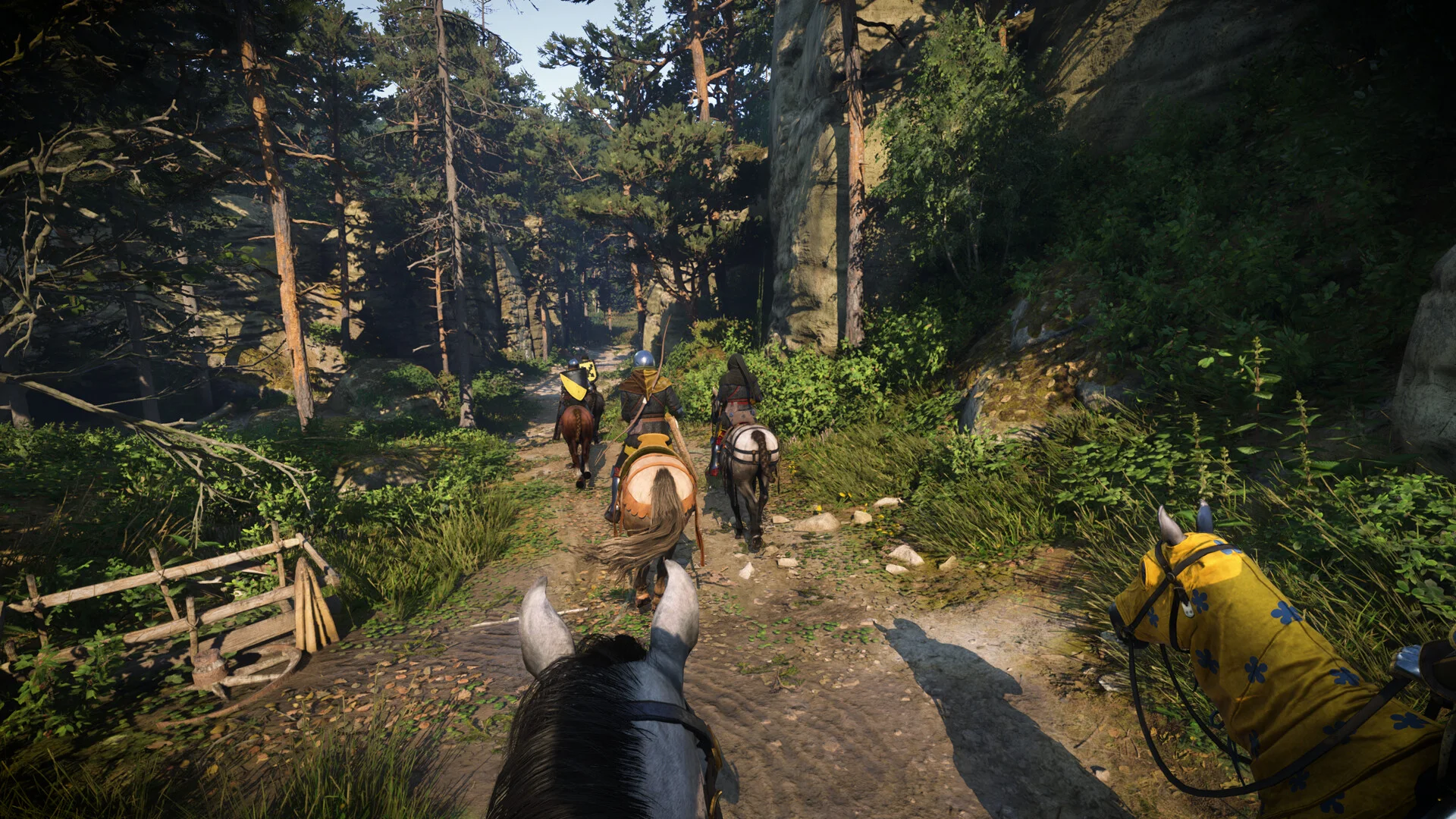
Most RPG heroes become competent so quickly that incompetence is just a tutorial. Kingdom Come's particular pleasure comes from letting awkwardness survive longer. A conversation can go badly because your social position is wrong. A fight can become frightening because confidence is not the same as technique. The fantasy is not that you are secretly the most important person in the room; it is that the room may not care.
Realism is useful when it creates decisions
Simulation details matter most when they change behavior: preparation before travel, equipment choices, reputation, social context and the cost of picking a fight you cannot comfortably finish.
Being underqualified makes success memorable
An encounter feels different when winning is not assumed. Escaping, talking, preparing or returning later can feel like legitimate solutions rather than cowardice.
Combat asks for patience before power fantasy
Players arriving from faster action RPGs can initially overcommit. The more grounded rhythm rewards reading distance, stamina and openings rather than treating every opponent as a damage sponge.
The world is strongest between objectives
Villages, roads and incidental situations sell the setting when you are not rushing from marker to marker. The mundane texture gives dramatic events somewhere believable to happen.
Friction is still friction
A system can be thematically appropriate and still annoy you. Players who dislike maintenance, slower progression or consequences for small mistakes should not assume 'immersion' will automatically convert those preferences.
Why it remains an attractive search topic
Kingdom Come: Deliverance II continues to appear among strong-selling premium games on current Steam charts, which keeps beginner, combat and 'worth it' questions alive.
Who will love it
Players who enjoy inhabiting a role before dominating it, who can laugh at an ugly failure, and who prefer worlds that push back rather than organize themselves around the player.
WyrdLife take
Kingdom Come works when realism stops being a marketing noun and becomes a source of embarrassment, planning and earned confidence. The memorable story is often not that Henry won—it is how badly the situation looked before he found a way through.