
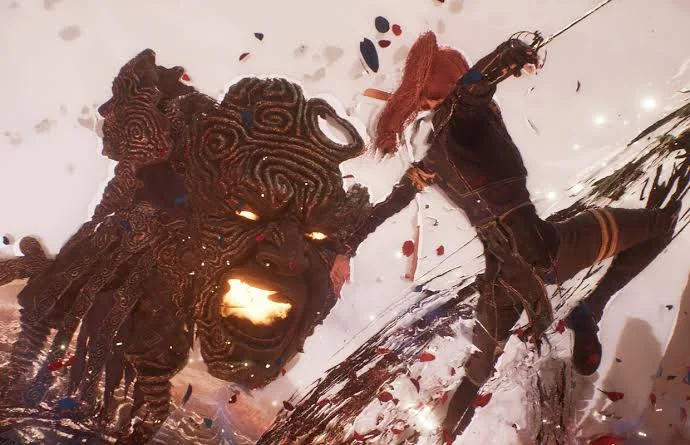
There is a moment early in Clair Obscur: Expedition 33 when the safest RPG instinct—wait, read the menu, choose the sensible skill—stops being enough. The enemy attacks, the screen asks for a dodge or parry, and what looked like a stylish turn-based game suddenly becomes personal. Miss the timing and a plan that looked perfect on paper collapses. Land it and the fight feels less like issuing orders and more like performing them.
The first hours are prettier than they are comfortable
The Belle Époque-inspired world does a lot of immediate work: strange landscapes, painterly color, melancholy music and a premise built around an annual death sentence. But the game is not content to let atmosphere carry it. Reactive inputs sit inside turn-based combat, so even a good build cannot completely replace attention.
Parrying is where the relationship changes
Dodging is the safer language to learn. Parrying is the seductive one. Once enemy animations begin to read as rhythms instead of chaos, successful counters change the emotional texture of a fight. A boss that initially feels unfair can become the encounter you restart voluntarily because you know you can execute it cleaner.
It still behaves like an RPG under the reflex test
Pictos, Lumina, equipment, stats and character synergies matter. The official design explicitly combines buildcraft with real-time dodge, parry, counter and aimed weak-point attacks. The action layer does not erase the RPG; it makes your build answer a second question: can you actually operate it under pressure?
The story works because the premise is not treated like trivia
The Paintress erases people at a descending age each year, and Expedition 33 leaves knowing what that means. The strongest stretches are not lore dumps but quieter moments where the party's impossible timetable colors otherwise ordinary conversations.
The part some players will bounce off
If timing-based defense irritates you, the system can feel like the game is interrupting a genre you came to enjoy. Likewise, players who want a giant seamless open world may find its structured regions less liberating than expected.
Why the hype has lasted
Sandfall said the game passed five million sales in 2025, and the continued updates make this more than a launch-week curiosity. The appeal is unusually easy to explain: it takes familiar turn-based decisions and gives every enemy turn the possibility of becoming a small skill test.
Who should play it now
Play it if you like party-building but sometimes find passive enemy turns dull, if music and art direction genuinely affect your attachment to an RPG, or if you enjoy bosses that become easier because you learned them—not only because a number went up.
WyrdLife take
Expedition 33 is not interesting because it 'saves' turn-based combat. It is interesting because it trusts turn-based combat enough to complicate it. The menu choices matter, the builds matter, and then the enemy swings and asks whether you were paying attention.